Wednesday, January 31, 2018

How to Create a Strong Promotion Strategy for Your Financial Website

How to Create a Strong Promotion Strategy for Your Financial Website

Image source: https://blogger.googleusercontent.com/img/b/R29vZ2xl/AVvXsEjaq1hRhxEfDxbPXUXDOaD25VVPXNxkrrQsPbn7r9x4Mjn_Ww4_xhxvyf2d12DgRft1jCnRkDNN1bqehBqno6G8bozppOUlVKjIY_zD8PpOPWT06HkkyM2WdAjairvTuCTPdw6xtg3Vwp0/s1600/infographic-breaking-down-the-way-an-entrepreneur-goes-from-idea-generation-through-to-initial-public-offering-How-to-Start-a-Startup-and-how-to-make-money.png

Marketing can be a touchy area when the service you provide is the management of peoples money and investments. To compete online, financial institutions need to use high-quality digital marketing tactics. This starts with a strong promotion strategy for your website.

Reaching new clients today means delivering quality information that entices your target audience. Simply having an online presence isnt enough. It needs to be dynamic.

If youre a newcomer to the digital marketing world, youll need some initial help. Lets look at few tactics to get you started.

Content Marketing Is Key

Marketing is really just about reaching people and telling them what you do and what you know. Right now people crave online content, so this is a great way for you to reach the public. Your online promotion strategy should start with creating fresh and informative content.

A great way to do this is with a blog. Adding a blog to your site allows you to deliver new content on a regular basis and displays your industry expertise to potential customers. Intrinio offers a data feed and blog articles for developers and investors in the financial industry.

The news is filled with current events that affect the financial sector. This is your opportunity to create articles and opinions that showcase your professional awareness.

You should also think about what knowledge the consumer seeks and create posts that answer these questions. These could be tips or FAQs that establish trust and consumer confidence.

Search Engine Optimization

Online content marketing is useless if nobody is finding you. Optimizing your website content and blog articles with keywords and quality links are essential for a successful promotion strategy.

Your content should include language your customers would use to search for financial services. It should also make clear what exactly you do and where youre located. This helps search engines rank you appropriately.

Obtaining quality backlinks to your website will also improve your online presence. If you have longstanding clients or vendors, ask them to link back to your site from theirs.

Provide Informative Video Content

Video marketing has become a great way to reach a target audience and deliver relevant content. You can also add video to blogs, put it out on social media and even include it in email newsletters.

The inspiration for your videos can come from the content youve already created. Expand on things that the consumer wants such as financial tips and FAQs. Video also provides a great opportunity to inform the public about what you can offer along with your general business principles.

Make Sure Your Website is Mobile-Friendly

People are accessing the internet and interacting online through their smartphones more than ever. If your website is not optimized for mobile devices, you are missing out on great online exposure.

Talk to your web developer about providing mobile optimization.

A Successful Online Promotion Strategy

Theres no better alternative than providing quality content to potential customers. Spreading your expertise should be the foundation of your online marketing strategy.

ArticleCity provides content marketing solutions to increase traffic and generate leads. Sign up today.

Related Posts:

How to Create The Funniest Viral Dog Videos
Why a Logo Maker Is a Must for Advertising
How to Build a Strong Promotion Strategy for a
12 Local SEO Solutions That Will Help You Outrank

How to Become a Sports Writer Online

How to Become a Sports Writer Online

Image source: https://image.slidesharecdn.com/goalspart2-150514063850-lva1-app6892/95/my-goals-in-life-bba-orientation-assignment-13-638.jpg?cb=1431585831

Do you love sports and writing? Why not combine the two and build a rewarding career?

You dont have to be an athlete to work in the sports industry. If you have a flair for writing, you could work as a sports journalist. This way, youll turn your hobby into a high-paying job.

In 2017, the average salary for a sports journalist was $41,698 per year. You can earn even more by blogging about sports. Or you could write a book and sell it online.

Most people have a favorite sport. Depending on your audience, you can write about football, rugby, or baseball. Getting started is the hardest part.

Here are some tips on how to become a sports writer and make a name for yourself:

Find Your Niche

The first step is to decide what you want to write about. Are you passionate about fitness and bodybuilding? Or perhaps you know everything about soccer?

Find your niche and hone your skills in that area. Read the latest news and educate yourself. Watch live competitions and take notes.

If you want to become successful, knowing about sports is not enough. You have to continuously learn and stay up-to-date with the trends.

Most writers who work in this industry do it because theyre passionate about sports. Money comes second.

For inspiration, check out popular sports blogs and websites. Try to determine what they have in common. This should give a pretty good idea on how to get started.

Get Educated

One of the best things about working as a sports writer is that you can start anytime. Its no need to have a degree in sports or journalist. However, you must have a clear understanding of the jargon.

Each sport has a language of its own.

For instance, betting involves terms like dead heat and sports picks service plays. If you write about soccer, you need to know what a free kick is.

Make sure you master the grammatical rules. Read sports articles and follow the best writers in this industry.

If you have a flexible schedule, apply for sports journalism internships. This will give you the opportunity to work side-by-side with skilled reporters. Its also a great way to build connections and acquire sports knowledge.

Start a Blog

After choosing a niche, start your own blog. Share insights about your favorite sports, post news, and publish interviews.

Focus on building your audience. Connect with readers on social networks and let them know about your blog. Reply to comments on Quora and Reddit.

Post content at least three times a week, and share it online. This will boost your popularity and reputation.

Your blog serves as your portfolio. It showcases your work and skills. At the same time, it allows you to practice and get better at writing.

Still Wondering How to Become a Sports Writer?

Once your blog is up and running, you can finally work as a sports writer.

Search for writing gigs on LinkedIn, Glassdoor, and ProBlogger. Apply with your resume and portfolio.

Many companies pay sports writers to create content for ads, books, or movie scripts. Contact them and link to your best blog posts. Show employers what youre capable of.

Check out the online versions of local magazines and newspapers. Pitch journalists and build affiliations. The more time you put in, the higher your chances of success.

Stop asking yourself how to become a sports writer. Take the plunge and hit Publish! Remember that everyone starts somewhere.

Its never too late to follow your dreams. Give it a try! You can never know where it might lead.

Related Posts:

12 Local SEO Solutions That Will Help You Outrank
10 Unique Blog Ideas to Write About
Why a Logo Maker Is a Must for Advertising
Types of Replacement Windows: A Complete Guide to

How Stealing Harvard's Investment Strategy Can Make You Rich

How Stealing Harvard's Investment Strategy Can Make You Rich

Image source: http://www.gta5tv.com/wp-content/uploads/2013/11/GTA-V-infinite-money-620x400.png

When I spoke with Jack Meyer, the former manager of Harvard University's endowment, at the offices of Goldman Sachs on Fleet Street in London back in 2009, he was thoroughly chastened by the recent 25%+ drop in the value of Harvard's endowment. A month or two later, Stanford University's President John Hennessy, reflecting his Silicon Valley roots, was more optimistic about Stanford's similar collapse, telling me: "Look, Nick, it's not the end of the world. It just puts us back to where we were in 2006." Hennessy's optimism notwithstanding, the crash of 2008 turned much of the financial world on its head. This included much-vaunted "Yale model" that had made Harvard tens of billions of extra dollars over the past two decades.

Despite the challenges of the market meltdown of 2008, the university endowment investment model remains one of the most powerful investment strategies around. And thanks to exchange-traded funds (ETFs), today you can duplicate this investment strategy in your own personal investment portfolio. It is also an investment strategy I have implemented with terrific success through the "Ivy Plus" Investment Program for my clients at my investment firm Global Guru Capital.

For a period of more than 20 years, the investment strategies of top university endowments seemed blessed by fairy dust. The top three U.S. university endowments -- Harvard, Yale and Stanford -- consistently had returned more than 15% per year over the last decade. And even after the onset of the credit crunch in the summer of 2007, the Harvard endowment gained 8.6%, Stanford rose 6.2% and Yale climbed 4.5% through June 30, 2008. That compared with a drop of 15% in the S&P 500 over the same time period.

That all changed once the financial crisis hit in full force in 2008, and the top university endowments plummeted by 25%-30%. The joint losses for Harvard, Yale, Stanford and Princeton hit $23 billion in the 12 months ending June 30, 2009.

Maybe those Ivy League types weren't so smart after all...

Since the dark days of 2008, top university endowments have staged a comeback. Primed by savvy investments in technology, Stanford's endowment rose 14.4% in the year ended June 30, 2010, outshining returns at Harvard and Yale, which gained 11% and 8.9%, respectively.

Yale's David Swensen: The "Babe Ruth of Investing"

You can trace the long-term investment success of top university endowments directly back to the efforts of a single man, Yale's David Swensen.

As the Yale endowment's chief investment officer for two decades, David Swensen has earned a reputation as the "Babe Ruth" of the endowment investment world

After taking over the Yale endowment in the mid 1980s, Swensen boasted 15.6% average annual returns through 2007 and no down years going back to 1987.

So, how did Swensen's success single-handedly change the rules of institutional investing?

In 1985, around the time Swensen took over, Yale had more than 80% of its endowment invested in domestic stocks and bonds. But Swensen, an economics PhD, observed that no asset allocation model ever actually recommended that way. As long as their correlation with U.S. stocks and bonds was low, adding unconventional assets to your portfolio would both reduce your risk and increase your return. This led Yale to emphasize private equity and venture capital, real estate, hedge funds that offer long/short or absolute return strategies, raw materials, and even more esoteric investments like storage tanks, timber forests and farmland.

Until the fall of 2008, this approach worked almost like magic...

The "Yale Model": Still the Best over the Long Run

But the relatively poor performance of the Yale endowment during the crash of 2008 put Swensen on the defensive. Critics pointed out that during the meltdown, a traditional portfolio of 60% stocks and 40% bonds would have lost only 13% of its value, rather than the 25% or more lost by the diversified portfolios of Harvard, Yale and Stanford.

But as Yale's President Richard Levin pointed out in Newsweek magazine, that argument is astonishingly shortsighted. Over the past 10 years, including the crash, Yale's endowment managed average annual returns of 11.7% to reach its current value of $16 billion. A 60/40 portfolio over the same period would have earned 2.1%, producing an endowment of only $4.4 billion. Put another way, Swensen's strategy had earned Yale an extra $11.6 billion over 10 years. That indirectly made Swensen one of the world's largest philanthropists, on par with Warren Buffett and Bill Gates.

Throughout the crisis, Swensen remained adamant that the model was viable over the long run. He pointed out that the single worst thing that you can do is to avoid risky assets after a market crash. He knew that Yale had suffered from poor decisions on asset allocations in its past -- one that had put Harvard-level wealth out of its reach forever.

You see, at the time of the market crash in 1929, the endowments of Harvard and Yale were roughly the same size. But Yale's trustees got spooked and invested heavily into "safe" bonds for the next five decades, while Harvard tilted more toward stocks. The result? Over the next 50 years, in relative terms, Yale's endowment shrunk to half the size of Harvard's.

Since the crash of 2008, Harvard has implemented the lessons of 1929 well. Leaving its critics aghast, Harvard actually has increased its allocation to high-risk positions in alternatives, at the expense of its "safe," fixed-income allocation.

Yes, You Can Replicate Harvard's Success...

In 2005, Swensen published a book, "Unconventional Success: A Fundamental Approach to Personal Investment," which explains how you can apply Yale's investment approach to your own portfolio. Swensen argues that Yale's investment strategy is tough for you to duplicate. After all, Yale has 20 to 25 investment professionals (Harvard at one time had as many as 200) who devote their careers to looking for investment opportunities. Yale also has the deck stacked in its favor. Its sterling reputation allows it to invest in the very best private equity and hedge funds -- asset classes that are not readily available to retail investors. As Mohamed El-Arien, a former head of the Harvard endowment put it, attempting to duplicate Harvard's results "would be like telling my son to drop out of school and play basketball with the goal of becoming the next Michael Jordan."

Of course, highly paid investment managers like El-Arien have every reason in the world to overstate the impact of their "skill." But this does not dilute Swensen's basic message: to focus on the "big-picture" asset allocation decisions and move your money out of U.S. stocks and bonds into global and other asset classes. Swensen himself recommends that you model Yale's asset allocation through a portfolio consisting exclusively of index funds with low fees.

At my firm, Global Guru Capital, I have run an "Ivy Plus" Investment Program that replicates the investment strategy of the top university endowments using Exchange Traded Funds (ETFs) for the past two years. So far, it has behaved exactly as advertised. In the 12 months between June 30, 2009 and June 30, 2010- dates for which Havard has released performance data - the performence of the fully invested "Ivy Plus" investment program has matched the Harvard endowment almost exactly.

Of course, two years isn't a long time. But the "Ivy Plus" strategy has outperformed some of the top hedge funds in the world during some of the toughest times ever in financial markets, by sticking to a disciplined, highly diversified asset allocation strategy.

My biggest challenge? The "Ivy Plus" investment program is a hard strategy to "sell" to my potential clients. It just seems too unexciting and straightforward to believe...

The bottom line? You may not have access to the Michael Jordans of the investment world. But diversifying out of a standard U.S. stock and bond portfolio into asset classes like commodities, real estate, and global stocks and bonds can go a long way toward generating Harvard-style returns.

Maybe those guys and gals at Harvard, Yale and Stanford aren't so dumb, after all...

Tuesday, January 30, 2018

How Does A Bank Look At Your Financial Statements

How Does A Bank Look At Your Financial Statements

Image source: https://www.mpstarfinancial.com/wp-content/uploads/2012/06/exhibit-b-1.png

As a business owner, there may be times when you need a loan or a line of credit to help purchase new materials or improve a temporary cash flow situation. Banks will require copies of your financial statements to determine whether or not you are credit worthy. Here's what the bank will look for in your statements:

Is Your Business Established?

One of the factors a bank will consider before lending money to a business is how established that business is. Did you just start your business last month, or have you been operating for the last four years? A business that has successfully been operating for several years will have a better chance of securing funding than a newly born business, most businesses fail within their first year of operation, and are considered high risk by lenders.

A key issue for businesses trying to obtain financing is related to your timing. If you wait until you are in a cash flow crunch, you lose your negotiating power with the potential lender, and your overall financial position is weaker than if you look for capital before the cash flow situation arises.

How leveraged are you?

Banks will look over your income statement and balance sheet to come up with financial ratios. They'll run numbers and generate predictions to see whether or not you have the ability to make loan payments, and how likely you are to continue having the ability to make loan payments in the future.

One of the common tools to asses a business is their debt-to-equity ratio which is simply the total amount of your business debts divided by the equity in the business. The equity is determined by subtracting all of your debts from your assets. A quick example:

Assets

Cash $10,000
Inventory 50,000

Liabilities

Accounts Payable $40,000

Equity would be $20,000 ($60,000 in assets less the $40,000 in debts) and the debt-to-equity ratio would be 2:1 ($40,000 in debts divided by $20,000 in equity).

Generally speaking, the higher the debt-to-equity ratio, the more risky a business is, but there are many other factors a bank will consider. One of those is the industry you are in. Some businesses are by nature more leveraged than others. It is a good idea to know where your company stands compared to its peers before you request a loan from the bank.

Are You Securing the Loan With Collateral?

When a business wants to take out a loan or line of credit, often they'll be asked if they have any collateral that the bank can use to borrow against. This reduces your risk in the eyes of the lenders, since if you fail to keep up with your loan payments the bank has the right to take whatever you used as collateral to recover their money. Proof of value for items used as collateral will need to be established, and you may find the bank has a different idea of what the potential collateral is worth than you do!

Collateral for loans determines the terms of the deal. Generally, loans with collateral are viewed as less risky, and therefore have lower interest rates, and have longer repayment terms. Also, the more long term the collateral, the longer the term of the note, for instance, a real estate loan will have a longer repayment than one secured by accounts receivable.
Some commonly used collateral include:

* real property
* equipment
* accounts receivable
* inventory
* intellectual property

Personal Guarantee for Small Businesses

Many small businesses will be asked to sign a personal guarantee on a business loan. Your signature indicates that you will be personal responsible for assuming the debts of the business if the business defaults on the loan and is unable to pay back the money. It reduces the risks to the bank lending the money to a business, because they have another avenue (you) to pursue if the original borrower (the business) does not keep up with payments. Sometimes the business owner will be asked to assign a portion of their personal assets or property over to the bank in order to secure the business loan.

Cash Flow and Profitability

A well established business can sometimes obtain financing if they show a good history of cash flow and profitability. Banks will determine this information through your financial statements, including your income statement and balance sheet and will probably want to view at least three years of records. It is important to consider the impact of the new loan. Often times, the bank will 'pro forma' the financial information you give them to see if the new loan can be serviced by the existing profits of a company. Many times a business owner will want to consider the profits that will be made with the loan (additional inventory or new equipment), but a bank takes a more conservative approach to see if the historical profits will support the new debt.

Help The IRS Just Put a Tax Lien on Me

Help The IRS Just Put a Tax Lien on Me

Image source: http://taxmachine.us/wp-content/uploads/2015/02/LT11.jpg

Presently the real estate market is in a pretty bad way, this falls in line with the fact that there is a financial crisis in the US. Not to say that anywhere in the world is any different and world markets are all suffering a credit crunch. When this kind of financial situation exists generally one of the most immediate markets to suffer is the real estate market.
he request must be in writing and signed by the person requesting the information (stamped signatures not allowed).

"The primary function of the Internal Revenue Service is to collect revenue for the Department of the Treasury," said Troy Sholl, a Licensed Taxpayer Representative at JK Harris & Company. "The IRS files federal tax liens against taxpayers to protect the interests of the government."

The issue of liens is one topic not discussed thoroughly be agents or an online foreclosure listings and the details on this topic are sketchy at best. Liens may have already been taken care of during the foreclosure process before you purchase foreclosed homes but still some of them remain and become part of the purchase package. The impact it will have on the homes you will buy hinges on the kind of lien existing on the homes, which along with the title is transferred to you.

Pay What You Owe! Pay your tax liability, either in full or by a paymentPlan. Be once paid, you must take the necessary steps to have in order to release the lien.

Based on the assessment value and market value of the properties in the tax sale, choose the properties that you are going to bid on and determine just how high you are willing to go for each property. Indicate that on list of properties that you will take with you to the sale (or have with you at your computer if you are bidding online).

There are some very important steps to take to make sure you don't get caught up in this nasty game of IRS roulette. Step number one: avoid having a tax debt altogether. This means filing your tax return on time each year, paying close attention to the deductions you're taking so as not to alarm the IRS with frivolous expenses, and to pay whatever small assessments the IRS sends immediately. Don't just put the notices in a drawer somewhere where they can collect dust and penalties, put them on top of your pile and pay them. Step number two: if you do accrue a tax liability, respond to the very first notice the IRS sends you. This is crucial. The more notices you make the IRS send, the deeper and deeper you get into their system, wherein your name and taxpayer ID# are flagged and your account is scrutinized. If you cannot afford to pay the entire amount the IRS is claiming you owe, which for most is the case, you will need to submit your financials for the IRS to determine how much they think you can pay. Most of the time, their number is much higher than your number, and a compromise needs to be made. But how do you negotiate when you don't know what you're entitled to?

The Internal Revenue Service may attempt to settle your appeal via telephone, fax, email, or post. In the event this is not practical, a hearing may be scheduled. You have the option of representation at the hearing.

There is too much at stake. Once your boss knows about your IRS wage garnishment and thinks that you've tried to cheat the government, she might start to wonder whether you're trying to pull a fast one on her. Your career trajectory will end up in a sink hole, and you may have to figure out how to satisfy an IRS wage garnishment on unemployment.

IRS tax liens can tie up your personal property and real estate. Once an IRS tax lien is filed to resolve IRS back taxes, you cannot sell or transfer the property. Often taxpayers find themselves in a Catch-22 under IRS tax liens where they have property that they would like to borrow against, but because of the IRS tax lien, they cannot get a loan.

Liens to Consider Before You Purchase Foreclosed Homes. Visit pay back taxes. Tax Foreclosure Sales From Irs Liens. Visit settle back taxes And Learn About It.

Guardian Protects Business Loans if Disability Strikes Offered in New York Market by National Financial Network, LLC

Guardian Protects Business Loans if Disability Strikes Offered in New York Market by National Financial Network, LLC

Image source: http://www.wnd.com/files/2012/09/joe_arpaio19.jpg

Garden City, NY (PRWEB) March 22, 2007 -- Business owners who have borrowed money in order to expand their businesses will benefit from a decision by The Guardian Life Insurance Company of America (Guardian) to increase the amount of loan obligations covered in the event of a disability.
Guardian's Business Reducing Term policy will insure up to 100% of monthly loan payments -- principal and interest, provided the obligation rests with a single principle -- should a business owner become totally disabled. This represents an increase over the policy's prior level.
In New York, Business Reducing Term is available through the National Financial Network, LLC, a Guardian General Agency.
According to Charles Dunbar, a National Financial Network agent, Business Reducing Term addresses a critical gap in the contingency plans of many business owners.
"As long as they can run their businesses, any loans they take out will be repaid from the earnings of the business. If they die, life insurance can pay. But if they become disabled due to sickness or injury and can't work, their business assets could be lost due to loan forfeiture," observed Charles Dunbar.
Guardian is currently the only disability income insurer offering a product specifically designed to fund financial obligations that require periodic payments expiring at a given time. In addition to loan payments, other applicable client scenarios include business owners who offer guaranteed employment contracts to their employees and those who've purchased a business or professional practice with any amount payable to the seller over a specified period.
"National Financial Network, LLC is in a unique position to offer our business-owner clients a product with which no other company can compete," said Charles Dunbar. "By increasing its business obligation coverage levels, Guardian is signaling it long-term commitment to a key sector of the U.S.economy.
About GuardianFounded in 1860, The Guardian Life Insurance Company of America, New York, N.Y., is the fourth largest mutual life insurance company in the United States. As of December 31, 2003, Guardian and its subsidiaries had $37.2 billion in assets. With more than 5,000 employees, approximately 3,000 financial representatives and nearly 100 agencies nationwide, Guardian and its subsidiaries protect individuals, businesses and their employees with life, disability, health and dental insurance products, and offer 401(k) financial products and trust services.
As long as they can run their businesses, any loans they take out will be repaid from the earnings of the business. If they die, life insurance can pay. But if they become disabled due to sickness or injury and can't work, their business assets could be lost due to loan forfeiture Contact: Charles DunbarNational Financial Network, LLC990 Stewart Avenue, Suite 200Garden City, NY 11530Tel: 516-240-1919

Monday, January 29, 2018

Grants for Business Startup - Eligibility Criteria

Grants for Business Startup - Eligibility Criteria

Image source: http://fundersandfounders.com/wp-content/uploads/2013/05/how-funding-works-infographic.png

Grants for business startups from government are given so that the entrepreneurs can buy supplies, advertise their business, hire employees and so on with the help of the grant money. Hence such grants are considered as very valuable monetary resources for owners of business startups. Even though these types of grants are not advertised widely, there are various types of such grants meant to support and help the entrepreneurs.

The main objective of the start up grants is to motivate and help owners of small businesses or entrepreneurs to get a good start. Certain grants can be small while others can be huge. Irrespective of the size of the grant, it is sure to help the business owners by cutting down their expenses which otherwise would have required to spend out of the pocket by the owner.

For availing grants for business startups, the entrepreneurs need to first create an impressive business plan that highlights the mission, goals, objectives, products and services, target segment and so on about the business organization as it can be used as a helpful guide while applying for government grants and also can be used along with the grant proposal. When creating a business plan, it should be done in a very organized manner, with easy to understand and read facts. Care should be taken write a business plant without typographical or grammatical mistakes.

The official website of small business administration has all information regarding the grants, the eligibility criteria and how to obtain them. They also provide good suggestions and tips for helping the entrepreneurs. Moreover the small business administration can get access to the resources, listings and various other helpful research tools which might not be available for the public in the form of publication or online. Apart from thinking about how they would get benefited from the grants for business startups, the entrepreneurs should also think how their business would help in improving the surrounding towns, cities and community. Such business startups would get immediate notice and the chances of getting grants are more when compared to others.

It should be kept in mind that not all start up grants require nonpayment as certain grants might have to be paid back. Hence it is very important to find out the terms and conditions of the grants they are obtaining. Getting approval on grants for business startups also depends on the kind of business ownership. For instance, men small business owners might not qualify for certain grants but women owners might.

Golfer, Golf Trolley and Mother

Golfer, Golf Trolley and Mother

Image source: https://www.justshopok.com/images/uploads/product_images/1444895881.jpg

This is a story, not in an Ohenry style, maybe you can just get the end of the story from the title. But the truth is, you know the end, but you never understand the beginning and the procedure. And if this is the fact, then you missed the most touching part. Yes, it is a story about a mother, a son, and a golf trolley. The story is happened in a poor village of a poor country. Yes, poverty is the background. And the boy is really a pretty one, yet he is still a hardworking one. Maybe we should say that God has noticed the merits of the boy, yes, he received his college entrance paper successfully, the future is so promising and the boy is now full of hope. Then the boy went to the university. Then the boy makes his mind to improve his familys living standard. Then, the boy finds his lover. The girl is really lovely, although not that beautiful. And she is also from a poverty-stricken family. the truth is that the apple of the girls eye is not that pretty boy but a play boy. The play boy is some guy born with a golden spoon, and his hobby is also a money burning thing, yes, he play golf. To help the girl pursuing her cherish, the boy lied to his mother and use his little money to pay for the golf fee. And if this is ok for you, the boy also tries to get more money from his mother by lying to his mother that he is ill. To his surprise, his mother can always provide him some money, although not enough. So one day, when the girl once again tell him that she want a golf trolley, he decided to ask his mother for the money. This time, his mother does not agree to give him money, instead, his mother said that as he is in dire need of money, he should try to earn some rather than come home once a month. He cannot understand his mothers words. Because his father has gone very early and he is the only one his mother could rely. The boy feels so strange and the then he decided to back home that week. When he comes back home, his mother is in pale and just come back from home. he always believe that his mother is strong but this time he feels that she is somehow like a kite without line, ready to fly away sooner. He does not dare to ask his mother for money. But to his surprise, his mother just let him follow her. And when he enters his room, he found a brand new golf trolley. At that time, he finally realizes that his mother knows everything. And he decided to be a real golfer. And this is the end of the story. If you want to know more, then there is another story about mother, son, and golf trolley next time.

Sunday, January 28, 2018

Financial Modeling

Financial Modeling

Image source: https://www.bpmglobal.com/files/images/getting_started_training/bfm_complete_model_dashboard.png

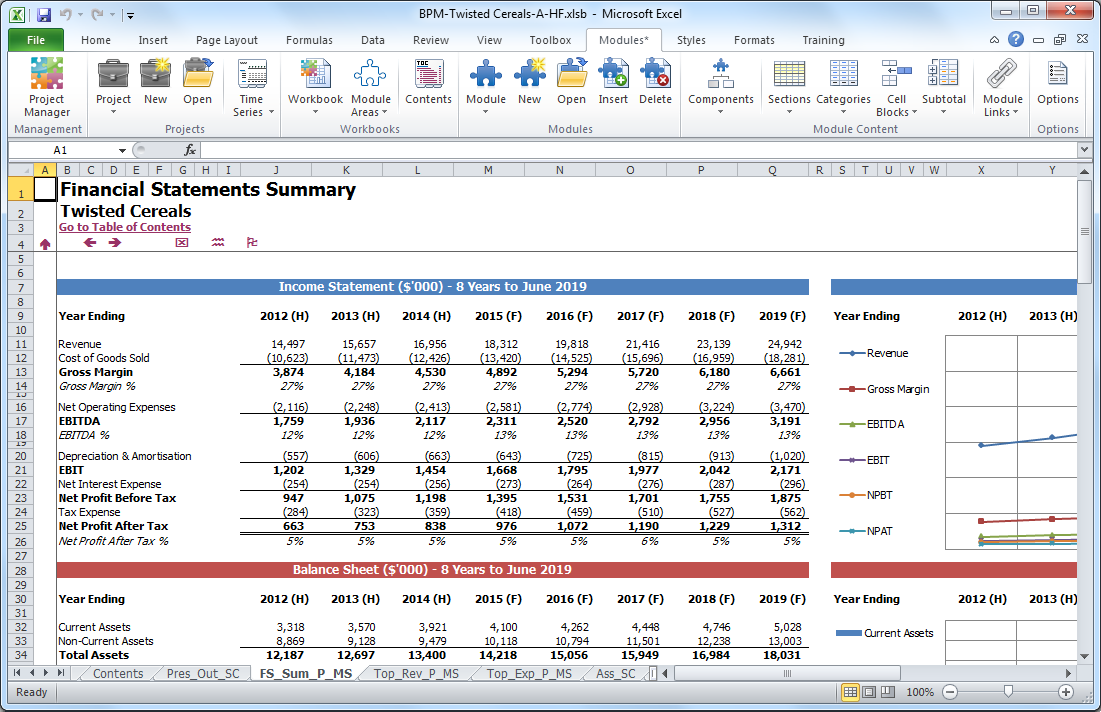
is essential for making decisions to acquire, keep or sell investment real estate. The central aim is to provide a framework evaluating options and risks. Financial modeling is also utilized for decisions regarding material capital expenditures and leases. Financial modeling is used regularly by operating businesses to make a variety of decisions. Properties with multiple complex leases particularly benefit from the use of complex software such as Argus to evaluate the effect of leases terminating and being renewed overtime. Financial modeling is also used to evaluate complex iterative scenarios with multiple options.
Research and analysis for the subject property or business, industry and submarket is the first step in preparing a financial model. The financial analyst reviews three to 10 years of historical data including both revenue and expenses, with as much detail as possible. (In many cases, 30 to 100 line items of expenses are analyzed.) "Spreading the data" provides insights into typical levels of revenue and expenses and anomalous data points. Industry data such as IREM and BOMA for real estate provides additional context for evaluating whether historical expenses are typical, low or excessive. There are similar industry data reports for a variety of businesses, organized by SIC code.

Research and analysis regarding the current status and health of the market and probable future prospects for the market are the next step in preparing a financial model. For real estate, data such as occupancy rates, rental rate trends, economic vacancy, properties under construction in the metropolitan area, properties under construction in the submarket, proposed construction in the metropolitan area, proposed construction in the submarket, and likely trends for operating expenses are considered in developing a financial model. Similar financial model research is performed for operating businesses to gain insights into current and future trends.

The financial model considers both historical data and research regarding the current health and outlook for the market. The conclusion is summarized in a presentation of probable future cash flows. In some financial models, multiple scenarios are prepared to address the possible impact of uncertain material influences. Analysis of the cash flows often includes calculations of net present value or internal rates of return (IRR).

The appraisal division of OConnor & Associates is a national provider of commercial real estate appraisal services including cost segregation studies, due diligence , insurance valuations, business valuation , feasibility studies, financial modeling, gift tax valuations, highest and best use analyses, casualty loss valuations and HUD map market studies.

File Bankruptcy Online - How To

File Bankruptcy Online - How To

Image source: http://fusible.com/wp-content/uploads/2010/09/filing-for-bankruptcy-online.jpg

Getting in debt might not be a problem. However getting out of the debt can be a big problem. The key to getting out of this situation is to elevate the situation you are in.
Inflation rates in the world are the cause behind the increase in number of bankruptcy cases filled. Period from 1994 to 2004 had an elevation in the bankruptcy cases. Having decided to get rid of bankruptcy, the next question you have to ask yourself is how to file bankruptcy. Out of many options available, opting to file bankruptcy online may prove to be a better option. Though recommended is to avoid filing bankruptcy online unless no other solution prevails. The after effects when one chooses to file bankruptcy online will reflect on the credit record for a long time. However, you may be forced to file bankruptcy online when there is a dead end.

As the world is becoming a global village, difficult and tiresome tasks have now become very handy and easily within reach of everyone. A new bankruptcy law under BAPCPA last October 17, 2005 as "do it yourself bankruptcy" was made available to the public which means almost same as to file bankruptcy online. It is an easy way out but the qualification it requires makes it difficult to opt for. Filing bankruptcy online is comparatively an easy task. All that one has to do is download all the forms needed to file bankruptcy online. However it may get complicated once you come to the filling part of it, so better hire a lawyer in case one is not confident enough.

When it comes to types of bankruptcy a person can file, one is left with numerous confusing options including filing bankruptcy online. Depending upon the eligibility and the situation that prevails, a person can either opt for chapter 7 or chapter 13 type of bankruptcy. A person is eligible to file chapter 7 bankruptcy online after he passes through a process called mean test and qualifies it. This test makes sure if the person who is willing to file bankruptcy online has enough sources to pay his debts using his current financial situation.

Chapter 7 of bankruptcy code calls for liquidation and it is not a part where one can file bankruptcy online. Property of the debtor will be liquidated and an amount equal to the dept will be generated to pay the creditor. Every property is not eligible for liquidation. They are categorized as exempted and non exempted properties.

To file bankruptcy online, locate and download all the required documents. After making a list of all the creditors one owes money to, make sure that the documents are well in place since it matters a lot when someone opts to file bankruptcy online. File the petition online. One should prepare himself to appear before the court. This meeting is called a 341 creditor meeting which calls upon all the parties to attend in order to remain informed of what is going on.

For crucial steps you need to follow in order to file bankruptcy online, visit the following website:http://www.file-bankruptcy-online.net

Estate Planning - No Contest Clause in your Will

Estate Planning - No Contest Clause in your Will

Image source: http://www.californiatrustestateandprobatelitigation.com/files/2015/08/Can-a-Bad-TrusteeLose-it-All-640x537.png

There is value in the story of an older client who had seen a very interesting clause employed in a will. There was a great deal of money at stake and the many family members had little reason to love each other, because they had never met and never knew of each others existence. It was expected that the will would be heavily contested on several different fronts in every conceivable way. The testator realized that a truly lengthy contest would result with the bulk of his estate in the hands of people he really didnt care for in the least: Lawyers.

In fact, that is not an unworthy consideration in a heavily contested will or long fought divorce; lawyers may end up with the bulk of the estate or marital property. The move to arbitration is one of the ways that the legal profession is trying to prevent these unseemly outcomes. The clause that this client had seen employed in his grandfathers will was like the following, Anyone named in and contesting this will receives the maximum bequest of $1, regardless of the outcome. This clause meant that regardless of whether the litigant had proven undue influence or diminished capacity or fraud, they would still only receive $1 as a bequest specifically because of having brought and proven their claim. Since none of the family knew or trusted one another a great deal, this effectively eliminated potential contests.

Often testators anticipate their will to be contested and they wish to insert what is called a no-contest clause in their will. The no contest clause is exactly what this elderly client had described, because it was designed to terrorize a would-be contestor of the will into thinking twice about facing the threat of getting just a dollar rather than the sum they had been left. Such clauses are also sometimes called terrorem clauses, because they are designed to scare the beneficiaries into accepting the bequest they are given. The no-contest clause described above was executed correctly in that each relative was wisely given something in the will that was worth the fear of losing.

In drafting a no contest clause, it is important not to entirely disinherit someone or to give them a bequest that is not something that they are afraid to lose. If someone is entirely disinherited, then they risk nothing by contesting the will. If they are successful, they may be able to have the will nullified in whole or in part. That is risked when the testator decides not to give someone who would traditionally receive money nothing at all. That is a mistake, a crucial error in such a clause, where the person who might challenge is given nothing to fear losing and therefore has no reason not to contest the will with every possible means. This situation is made worse when there is a group of people who are disinherited, and contesting the will. When this happens, the rest of the family must wait to inherit, which may cause substantial hardship on those who have done nothing wrong and are often those who are nearest and dearest to the testator.

Many jurisdictions refuse to strictly enforce no contest clauses because they discourage valid and invalid contests alike. These states look to probable cause to bring the contest and, if there is any, refuse to enforce the penalty against the challenger. Furthermore, no-contest clauses are falling out of vogue legally and are being construed very narrowly by courts. Many enquires into the will are not deemed contests in the eyes of these courts, because they wish to see no contest clauses become a thing of the past.

Before deciding to insert such a clause you should ask your attorney how your state is handling them and what is likely to happen in the future. In addition, you must make sure that those whom you decide not to make a substantial part of your will and attempt to intimidate with a no contest clause are left some amount of money that they would think twice about losing.

However, there may be better ways to leave your assets to those you choose rather than that traditional will. For many reasons the living trust is the superior instrument for most peoples needs. It is important to consult your attorney to find out the best way to protect your assets and whether a will with a no contest clause is a viable option in your state. A will, in many ways, is too encumbered with restrictions that make a trust a much better option if you would like to leave your assets to those that you choose and reduce the chances of your desires being challenged. Again, as always, ask your local attorney for advice about your wishes and find out whether no contest clauses are becoming a thing of the past in your jurisdiction.

Saturday, January 27, 2018

Does The US Owe You Unclaimed Money

Does The US Owe You Unclaimed Money

Image source: http://www.theblaze.com/wp-content/uploads/2013/10/screen-shot-2013-10-11-at-5.20.55-pm1.png

Whether you call it US lost money or US unclaimed money, the long forgotten checking and bank accounts, stock or cash dividends, checks which were never cashed, gift certificates, money orders and a host of other financial assets which lie unclaimed in the state department treasury can well be yours. Yes, the government does owe you money but it conveniently forgets all about it because it needs to balance its budget deficits. What more-it coolly gets away with it saying that the funds were a part of the US unclaimed money.

If we take the example of the State of California, we would realize that on an annual basis, a mind blowing $300 million are added to US unclaimed money. US lost money is being unrightfully used to boost the states treasury while its true owners are being deprived of their basic rights. Brad Pitt and Angelina Jolie are one of the few renowned celebrities along with Keanu Reeves and Adam Sandler who are victims to the US lost money.

Inside reports have it that the state owns thousands of dollars to these stars in the form of US lost money but has failed to return even a single cent. While thousands of dollars are owned to these public figures, the state government is taking no concrete steps to return their dues. The reason they give is that the rightful owners could not be found. Well, how difficult is it to find Hollywood actors or actresses. If the government is facing trouble locating these celebrities, it's about time they took help from the paparazzi.

US unclaimed money is not only owed to celebrities, there is $35 billion or more owed to Americans just like you. US unclaimed money in just the state of California alone amounts to approximately $5 billion and this is on an annual basis. You can imagine the what US lost money could do for its rightful owners.

US unclaimed money is automatically transferred to the state treasury if their owners fail to claim their money time. But when the government knows who their rightful owners are and can locate them as well, what stops the authorities from returning the funds. This is a question each one of us needs to ask the government.

The only real way to ensure that you get US unclaimed money that might be owed to you is to search for it. A simple search using your first and last name will find and tell you what lost money is found for you. So, what are you waiting for? Search for your unclaimed money today!

Debt Collectors - A Royal Nightmare

Debt Collectors - A Royal Nightmare

Image source: http://www.funpic.hu/_files/pictures/original/76/36/3676.jpg

Being affected by debt is probably one of the worst things that can ever happen. You will gradually find that the amount of unpaid bills and the number of phone calls from the debt collector will gradually increase day by day. When you are near bankrupt, your inability to pay bills will result in a very bad credit score, thus worsening your current situation. Credit score is greatly affected by debt records and your late payments, not surprisingly, will cause your score to plummet down.

Apart from having very low breathing space, terrifically low credit scores, a whole stack of unpaid bills and of course, no money, you will also have to deal with debt collectors.

Debt collectors are smack on their way to become the most hated people on the face of the earth. While many might not understand the gravity of this statement, those afflicted by debts will definitely know the problems put forth by the debt collectors. Harassment by debt collectors is probably one of the most commonly unreported crimes ever. There are several laws that have been framed to protect the consumer and these laws can be used against debt collectors.

The first step towards stopping harassment is to keep yourself abreast of all the latest developments in law. Most consumers are not aware that they are protected under the law, from the clutches of these rude debt collectors. You must also understand that the debt collectors are just doing what they are paid for; collecting money that is long due. Not all debt collectors are rude and relentless. Many resort to aggressive means of communication to simply scare that borrower, so that the latter is not faulty in payment. 99% of the debt collectors call several times a day. This can be highly annoying. Many of them threaten the borrower of undesirable consequences, if the borrower fails to the return the capital. Do you realize that this is actually against the law? Read on.

You can get the debt collector to stop phoning you by writing a letter to them requesting them to stop. You obviously have to pay back the debt in the stipulated amount of time, which otherwise might lead to other complications. But harassment by debt collectors, nevertheless, is strictly prohibited by the law. The Fair Debt Collection Practices Act prevents debt collectors from using certain methods of debt collection like threatening the debtor. So the next time you are harassed by a debt collector, you can immediately contact the Federal Trade Commission to report the incident.

If you are facing low credit scores, you can pay your debt collector to delete those records, which have details about your late payments and non-payments as well. This situation will greatly help in lifting your credit score, which will be the main deciding factor, when you apply for loans later. Debt records will pull down your credit score are increase your risk factor several fold so ensure that you eliminate them before applying for your next loan.

Damages That Can Be Covered By Landlord Insurance

Damages That Can Be Covered By Landlord Insurance

Image source: http://www.byrnesagency.com/wp-content/uploads/2012/10/A-College-Students-Guide-to-Renters-Insurance.jpg

A landlord Insurance is one of the best insurances for the property owners, which will recover any kinds of property damages. As a landlord you must be aware of the importance of landlord insurance. Landlord insurance will give you ease if your boarder damages the property or fails to pay the rent. These are the obvious situations mostly faced by the landlords.

So, if own a rental property and are heavily dependent on the rents you draw from the tenants you should purchase landlord insurance. During these times the landlords are under more financial risks than they used to be in the past.

Before going further, at first, I shall discuss some typical areas covered by the landlord insurance. The major areas which are covered in the Landlord insurance include the guarantee of rent, legal protection and the accidental damage coverage. Apart from this it will also help you avoid the financial losses by covering standard perils such as fire, lighting, explosion earthquake, storm, flood, escape of water/oil, subsidence, theft and malicious damage.

Here follows a discussion upon some of the typical landlords insurances.

Landlord buildings insurance

Under this insurance you will have coverage the damages caused by the perils such as fire, floods, burst pipes, mean damages and the similar occurrences. But remember a landlord building insurance will not include the loss connected with the contents of your property.

Landlord contents insurance

If you rent a fully furnished building then the insurance is a must for you. It will cover any looses related with the contents of your building. You can also buy limited contents insurance which is applicable for unfurnished or only partly furnished properties.

Landlords Loss of Rent

This is typical insurance for all landlords, which will protect you from the loss of rent. The landlord loss of rent insurance will protect you from the financial losses if your tenants refuse to pay the rent or some other unexpected happenings cause the loss of rent.

Emergency assistance

This insurance is also helpful for the landlords, especially for those landlords who stay away from their rented property. It will minimize your losses by covering emergencies like the failing electricity supplies and cooking facilities, plumbing problems, leaking roofs along with guttering, and damage to doors and windows. Thus, with a landlords emergency assistance insurance you will enjoy the real peace of mind.

Legal expenses insurance

Legal expenses insurance will minimize your losses by covering any legal expenses associated with recovering costs legally owed by your tenants or to legally evict them or to recover amounts for deliberate or intentional damage by them. Suppose your tenants refuse to pay the rent and you want to take them to the court to collect your owed rent. This policy will pay the "Legal Expenses".

Thus, as a landlord if you want your property in a good working order and also wish to minimize the financial losses you must think of a landlords insurance seriously.

Friday, January 26, 2018

Changing Your Money Story

Changing Your Money Story

Image source: http://jenturrell.com/wp-content/uploads/2015/12/unspecified-2.png

You may want to change your money story because of how you model your parents view of money and abundance.

You may not realize that you may also be in resistance to your parents way of acting out with money and that may be affecting how you attract money in your life now.

How your parents treated you

Do you remember how your parents treated you or each other when comes to money this may be the key to changing your financial story because it has been holding you back from achieving your goal.

Does it make you feel a sense of injustice or angry because you are doing the same thing in your life with money that they did and are you will to change this, could you let go of this story and create a new story.

See the pattern of your parents

Writing it down or sharing it with another can help you to understand their beliefs and actions.
Can you take the time to see the pattern of your parents it may have something to do with fear of not making it, or they did not trust in their abilities and talents or they did not feel they were worthy of having more than enough.

When you start to write down your parents pattern for receiving money you may see a pattern of how they were allowing money to come to them, is it through work alone then ask yourself is this the only way money comes to me or at the end of the month you are always short because you over spend the weeks before and is this a pattern of your parents.

Abandoning your family heritage

Are you willing to let go of this way of acting out your money problems that you have known all of you life because once you decided to do so you will be abandoning your family heritage the people who were very important to you and that you look up to.

Whether their actions were right or wrong everything they did you took for granted and accepted as your truth because they love you this is the environment you only knew although their decisions have cost them and you these difficulties feeling and actions with money.

Changing your money story

Changing your money story from what you grew up with is a process of going back to your early childhood and to start taking note of your family thinking, their beliefs you have heard them say about money that you may also say to yourself or are rebelling against it yet keeping the feeling and beliefs still alive in you.

Once you have noted your behavior with money this is a start to making small steps to changing your habits, emotions and beliefs when comes to how you are behaving with money this will help you in having a better life with money.

Conclusion: Changing your money story is sometimes not clear like following a road map because there are many beliefs and emotions connected to it.

Car Purchase Plans At Your Service

Car Purchase Plans At Your Service

Image source: https://www.fourquadrant.com/wp-content/uploads/2014/12/Strategic-Account-Plan-Template-Discover-Prioritize-Opportunities.png

Owning a car is a dream most individuals have and one which can be compared to owning a home. And if you already own a car, I bet the idea of changing it has crossed your mind once or twice, if not more. But cars are know to be very expensive items, and obtaining finance for the purchase can sometimes prove to be tricky. Vehicle loans have become very popular and have assisted many if obtaining their fantasy car.

The downside of vehicle loans is that not everyone qualifies for them without the aid of a co-signer, a down payment or a collateral. Also, there are those who simply do not feel up to going through an application process and going into debt with a lending company. For those of you out there who feel vehicle loans are not for you, the financial market has come up with car purchase plans. Get to know more about this interesting option!

Basics On Vehicle Purchase Plans

This financial product is also known as personal contract purchase and is a very attractive option for those who believe that car loans are not really the best way to go. What do these purchase plans entail? Well, it actually depends on the chosen plan. There are three different alternatives when it comes to purchase plans.

Option #1: The buyer will have to make a down payment to have access to a payment plan based on the buyers financial situation and desires. This down payment will be worth at least the 10% of the value of the vehicle. This plan is the most traditional one and is offered by most dealerships.

Option #2: If flexibility is what you are looking for, and you have limited funds at the moment of acquiring your vehicle, then this is the perfect plan for you. The buyer aggresses to make the final payment of the car once the contract expires. How is this payment calculated? The final figure is calculated by the dealership taking into account the age of the car, general condition and mileage.

Option #3: In this case, the buyer can actually choose not to make the final payment, thus returning the car after the contract expires. This plan resembles a lease contract, but it is not quite the same financial product.

Car purchase plans are available to both individuals and businesses.

Car Purchase Plans Also Carry Disadvantages

Every single thing in life has a downside to it, and vehicle payment plans are not the exception to the rule. When you apply for a vehicle loan, you can buy whatever vehicle you can think of within the decided budget, be it a used or a new car, it does not matter in the least. With car payment plans, your options are narrower as you will only be able to buy a new car. This option is not available for used car purchases.

So if you were not thinking of getting a brand new car, or if your funds are limited, then these plans might not be the answer to your prayers.

Other Available Options

Provided that auto loans are not what you want and that you do not qualify for a purchase plan, does that mean you will not be able to get your much desired car? Not necessarily. Sometimes, when you have no other choice, you will have to take the road less traveled by and save up the money. No pain, no gain, right?

Budget Travel Invest Your Time Now and Save Money Later

Budget Travel Invest Your Time Now and Save Money Later

Image source: http://kennedyfinancialgroup.org/wp-content/uploads/2015/08/blog_ai_lg_money_moves.jpg

When considering when, where, how, for how long and what type of vacation, trip or holiday venture to undertake, we all get caught up in the anticipation, excitement and exhilaration. Sometimes we let the more important financial side of things slip a little. After all, for most of us, taking a vacation may only happen once a year, for some, even more infrequently. We tend to indulge and forget about our pocket book a little.

There are many ways to save money, avoid unnecessary cost, ensure you take care of details end up a smart and perceptive traveler. Budget travel planning is easier that you might think. Here are a few handy travel tips for making your travel dollar go further!

Cushion your budget - When considering a trip or planning budget travel, it is important to plan for the unexpected and consider the financial side of things early on. This ensures affordability, liquidity and having the resources to enjoy it to the fullest! Plan for the worst-case financial scenario and prepare for things to cost a little more than you expected. Allow up to 20% increase in cost to be on the safe side of things.

Emergency money: Carrying some spare cash somewhere can also be a lifesaver. The rule of thumb seems to be around $50-$100 in small bills. This can be used for incidentals, ground-transportation like cab fare and/or your return home, tips and more.

Set your priorities: Set some spending priorities and criteria in advance, like eating at a special restaurant or attending a concert, even if this means sacrificing a bit on lodgings or visa versa, depending on what is more important to you.

Keep an eye on your credit cards: It is extremely easy these days to have access to your financial resources through ATMs and credit cards. Just remember that it is just as easy to overspend because of it being so readily available. A little discipline will go a long way to protect your financial interest and help you stick to your travel budget.

Maximize gas mileage and efficiency: If youre planning a road trip, make sure that your car has been serviced at least a week before your trip. A well-maintained vehicle will go a long way to ensure carefree driving. If your budget allows, you may consider renting a vehicle to save wear and tear on your own. Small economy cars are better on gas and are much more comfortable than they used to be. Minivans and sport utility vehicles are practical only if you have to transport a large family with a lot of equipment or luggage.

Gas fill-ups: For filling up your car en route, avoid pushing to the limit until the gas runs out. Gas will obviously be more expensive when filling up in remote locations. If you miscalculated and the light on the dashboard indicates that you are really in need, opt for filling just half a tank until you reach the next more densely or major populated destination, where gas might be a little cheaper.

Pack-a-snack: Bring your own refreshments and snacks. Gas station prices on drinks and snack food are high. Avoid these during a pit stop, if you are counting your travel dollars. A cooler packed with lots of cool drinks, water and ice and/or a thermos of coffee or hot water for tea, some fruit, granola bars, or a sandwich, goes a long way to still the hunger and save you money by avoiding all high priced stops en route.

Thursday, January 25, 2018

Bad Credit Let It Teach You A Lesson

Bad Credit Let It Teach You A Lesson

Image source: https://s-media-cache-ak0.pinimg.com/736x/f7/5e/f3/f75ef3762a95524c195fad89d67396e2.jpg

Anyone can have credit problems. There are many unexpected circumstances that can lead someone to bad credit situations. The key is then to make something good out of it. Those who can benefit from negative experiences are more likely to succeed in life than those who just suffer them. In order to do this, you need to rid yourself from certain prejudices that most people who have bad credit are likely to have.

Any Situation Can Be Overcome

Ok, so you have bad credit now? You surely remember when your credit was in good stance and therefore, you need to understand that you can get your credit back. There is no reason to think that your credit will remain low. You just need to take control of your financial life and be constant enough to follow the advice of debt experts that will tell you how to improve your credit and stay away from negative credit influences.

Thus, it does not matter if you simply have some delinquencies on your credit report, one or more defaults on consumer debt or even a past bankruptcy on your report, you can still get back on track and recover yourself to achieve a good rank. You will surely be advised to use either the highest rate or the snowball technique to pay off your debt and get positive inputs on your history. The first technique requires you to cancel the highest interest rate debt while the second one requires that you pay off the highest amount debt instead.

Money Management Skills Can Be Learnt

Many people think that they just cannot learn how to manage their own money. They think that they are destined to live by the day without being able to save for the future. Nothing can be so far from reality. Money management skills can be taught and can be learnt. You just need to realize the need that you have and seek advice in the proper direction. There are many non profit institutions that can help you out with your problem.

First of all, you need to acquire budgeting skills. Preparing a budget is essential if you want to succeed on your finances. There is no better tool for foreseeing events that may alter your financial life than this one. Thus, if you do not know already how to prepare one, you should seek the advice of a professional that can help you design a financial plan taking into account your current situation and a reasonable future potential financial outlook of your finances.

Learning From Bad Credit

As with everything else in life, money management has specific procedures. You already know what you should not do. Make sure to learn the lesson and avoid repeating the same actions that leaded you to a poor credit condition. And, as the other side of the coin, learn what you should actually do in order to succeed when managing your income and expenses so you do not have to resort to expensive financing and avoid falling into the vicious circle of debt that can lead you to worsen your credit status or even risk bankruptcy.

10 Mistakes People Make With Their Money

10 Mistakes People Make With Their Money

Image source: https://cdn-media-1.lifehack.org/wp-content/files/2015/05/10-Common-Money-Mistakes-People-Wish-They-Realized-In-Their-20s.jpg

It is no laughing matter to see people making these money management mistakes. Are you making one or more of these mistakes with your money?

1. They haven't figured out the amount of income they actually need each week to do better than just pay their bills. They don't have a budget set up.

The appropriate definition of BUDGET is: the calculation of the amount of money necessary for an organization to function and reach its goals. If you are happy with just being able to pay your bills, and you never pay yourself first into some type of savings plan, you'll stay poor while you make your vendors rich. Every supplier that you pay is in business to make profits. You should run your business to make a profit. Your income target must include a profit or the enterprise will go broke and fail.

2. They don't work out ways to earn more money than they need, and then be willing to do whatever it takes to execute the plan.

By incorrectly estimating the amount of money necessary to exceed breaking even, they typically set their income target too low and lose money by living on credit instead of going into action to raise their income. Anyone can find different ways to increase their income; it is more often the 'willingness to do whatever it takes' that seems to be the problem.

3. They habitually spend more money than they make.

Using your income to buy the 'appearance' of having wealth is a deadly activity. I refer to this type of spender a Gratification Groupie. It can catch up with you quickly and over a short time can drown you in debt. This situation causes constant stress about money and brings on lots of sleepless nights. Money does not buy happiness. But, doing something productive and worthwhile and being appreciated for it will make you feel like a million bucks.

4. They never figure out what they will need in the future and then set aside a bit of cash each week in order to pay cash for the purchase later.

Buying things with a credit card because you are short on cash is committing your future production to the credit card company. You are then in economic slavery to the credit company. The right method to buy things, especially high dollar items, is to set aside a small amount each week till you have enough cash to buy the item, and then go out and negotiate a big cash discount. The guy with the CASH IS KING!

5. They buy services and products based on WANT rather than on NEED.

Buying decisions must be based on how your purchase of the product or service will assist you to produce more income for you. Honestly, do you want the latest cell phone that offers email retrieval and text messaging because your friends have one, or do you need it to increase your work productivity because you are out of the office making more money?

6. They never put money into a long-term savings plan so they have money for use later in life.

Are you counting on the younger workers' future production to supply you with Social Security income when you stop working? Boy, that is a huge gamble! Even though the government says the annual cost of living is rising 3 - 3.5% a year, the truth is that it is going up 8 - 12% a year. You have to make that much more income just to stay even. Why does our government report that it is only 3 - 3.5%? Unfortunately, it's because the government has to raise Social Security payments each year by the percentage they quote. Our Social Security system is already bankrupt and those living on Social Security alone are going in the same direction.

7. They never build up multiple sources of income. If one source disappears they are in financial trouble.

The expression 'don't put all your eggs into one basket' is true today, especially when it comes to income sources. Research profitable products or services you can add, or business ventures you can participate in that are ethical, and have a really good opportunity to producing a residual income.

8. They get stressed out about the low interest their bank pays on savings accounts while they are being murdered with much higher interest rates by carrying balances on their credit cards.

If you have high credit card debt, you are better off using excess cash to pay down the debt and get out from under the high interest payments rather than attempting to earn interest from the bank. As you reduce your debt, it is wise to keep sufficient cash on hand to cover a few months of living expenses. Once the debt is gone, or close to it, then begin investing any excess cash where you can get real growth.

9. They get stressed out about 'the economy' in general.

I'm surprised that most people actually worry more about 'the economy' than about their household or business failing financially. They worry about what the media is reporting about 'the economy' when that is something they can't control, while never looking at how they can affect the economy of their own household or business, which is what they CAN control. An increase in unemployment is no reason to worry. The creation of new jobs by small business far outweighed the loss of jobs in big corporations, according to the latest ADP report. A failing bank is no reason to panic. Banks receive funding for bailouts from the FDIC and other investors. No one is waiting in the wings to bail out your failing business. That is entirely up to you. So keep promoting your business, put aside some money, and sleep well at night while the dire news about 'the economy' rages around you.

10. They expect to survive financially without taking full responsibility for controlling their financial future.

Money problems have a simple solution. Cut expenses, increase your income, and correctly manage what income you do get. It's not only about how much money you make, it's what you do with it that determines your financial condition.

Proper money management is something educational institutions don't teach. People receive bad advice and false information about how to handle money. So then they make silly mistakes, get into worse trouble, attempt to solve the problem by using credit, wind up in more trouble, and then go searching for debt relief.

Fortunately, there is an inexpensive, proven, money management software system that can reverse the money management mistakes a person has made in the past, and keeps them from making those same mistakes in the future. It is an old-school system that your great grandparents used before the days of credit cards. Very wealthy people understand and use this system today.

5 Tips For Attention Grabbing Online Content Writing

5 Tips For Attention Grabbing Online Content Writing

Image source: https://s3.amazonaws.com/craig-moore-adsense-seo/seo-diy-tutorial-content-writing-basics.jpg

Are you looking to improve your online content writing skills?

Publishing content online is easy. But crafting fun, informative and engaging articles takes time, effort and knowledge on the topic.

Todays audience has a short attention span, so your content has to grab the readers attention right away.

Big blocks of text, run-on sentences, bad grammar, and fluff are all dealbreakers for your busy readers.

Luckily, you can learn how to improve your writing and adapt it to your target audience.

Keep reading to discover how to write attention-grabbing content and increase your visitor count.

1. Hook Your Reader

Your first sentence or paragraph should hook your reader and make them go through the entire article.

You can use humor, a well-supported fact or a question thatll make them think. Remember that if your hook is weak, your readers wont even bother to continue reading.

2. Use Short and Clear Sentences

One of the main rules of online content writing is using short and clear sentences.

Maybe youre tempted to share everything you know about the topic, resulting in big blocks of text.

But this is the exact opposite of effective content. Avoid using run-on sentences, fancy words and irrelevant information. Remove all the fluff and aim for clean, scannable text.

3. Optimize it For Search Engines

If your content isnt optimized for search engines like Google, you may be losing valuable traffic.

Each blog post or article you write should contain a few keywords on the topic. So when people search for it on Google, your article appears on the first page, provided its of good quality.

Take for example people who are looking to go on a holiday in Veracruz, Mexico. Theyll search for Hoteles Veracruz, so this is the exact phrase you should use in your article.

4. Add Some Personality

Online content writing doesnt have to be dry and boring. In fact, by adding some personality to it, your readers will relate to your posts more.

Even in fact-filled articles, you can still inject your opinion or tell a story to humanize the content.

Depending on the type of content, you can play with the amount of personality you add. In general, blog posts allow for personal opinions, humor, and sharing personal stories, but articles for serious businesses or news sites may not.

5. Include a Call to Action

Calls to Action are a crucial part of every quality piece of content. However, a lot of people use them to sell their stuff, and that can repel their readers.

Your CTA should invite the audience to sign up for your newsletter, read your blog or comment on the topic.

Avoid being salesy and telling them to buy something from you right off the bat. You need to gain their trust first.

Now You Know How to Improve Your Online Content Writing!

You can learn how to write for the web the right way with these five content writing tips.

Need support in crafting quality content? Check out our blog for more useful tips or sign up for a free account with ArticleCity to see how we can help you!

Related Posts:

How to Create The Funniest Viral Dog Videos
12 Local SEO Solutions That Will Help You Outrank
Why a Logo Maker Is a Must for Advertising
5 Ways to Create More Data-Driven Content for Business

Wednesday, January 24, 2018

5 SBA Loan Questions to Ask Before Getting a Loan

5 SBA Loan Questions to Ask Before Getting a Loan

Image source: https://www.capitaworld.com/wp-content/uploads/2017/11/capitaworld-questions-you-need-to-ask-before-getting-a-personal-loan-1280x670.jpg

If youre an entrepreneur, it can be difficult to find a small business broker whos truly looking out for you.

More often, were seeing unscrupulous players who are only concerned with stuffing their pockets. The business owner is then left with crippling debt, and the inability to pay it off.

Thats why loan offices still remain a popular choice. But, if you go this route, you still need to ensure that youre signing for a rate and terms you agree with.

Read on for 5 SBA loan questions you should ask your loan officer before applying.

1. What additional costs will be added to my loan?

Prior to even thinking about that SBA Form 770, you want to know what everythings going to cost you.

Luckily, of all lenders, banks and other local financial institutions tend to offer the lowest rates. The average APR from a local bank is 3%.

Also, if youre working with a broker from a community bank, they may tack on fees too. Decent brokers will only charge between 1% and 2% of the loan value for their services.

However, thats not always the case, so youll want to cover your base early on.

2. Do you offer short-term or long-term loans?

By now, youve probably identified what the purpose of your loan is. With this information, you should determine if a long-term or short-term loan is in your best interest.

Depending on your financial situation, one option will likely be a better fit. You should resolve this early on because not all institutions offer both options.

3. How long does it take for this process to be completed?

Depending on your lender, the loan application process can actually take some time.  Often, it takes several days or even a few weeks before a financial institution can approve your loan.

If you are in need of a quick turn around, this can help you eliminate lenders with long processing times.

Luckily, most lenders have fairly quick processing times and can let you know sooner than later. Some even can give you their decision within 24 hours.

4. When am I expected to make payments?

Coordinating a payment schedule is an imperative task with your lender. Both parties need to be on the same page to avoid any confusion or ill feelings down the road.

Traditionally, lenders received their payments in monthly intervals. Now, many allow you to make payments every week or every other week.

Some even allow you to make smaller daily payments.

If your lender requires daily or weekly payments, be sure that you have steady money coming in.

5. Does my industry matter?

Some institutions will only lend or refuse to lend to businesses within certain industries. Whether its too contentious or risky, certain businesses are frequently unable to receive backing.

This should be one of the first questions you bring up with a broker. This will save you from wasting time with someone who is unable to help.

If this is a concern of yours, you should probably consider going with a private investor. You can find private brokers who specialize in certain industries.

More SBA Loan Questions?

If you still have some SBA loan questions, then drop us a comment below!

Also, if your business needs a content marketing plan, we can help you there, too. Sign up here for awesome content that will drive traffic, leads, and sales to your website.

Related Posts:

Why a Logo Maker Is a Must for Advertising
What Are My Business Loans for Poor Credit Options?
Types of Replacement Windows: A Complete Guide to
12 Local SEO Solutions That Will Help You Outrank

5 Issues Authors Run Into That Require Legal Support

5 Issues Authors Run Into That Require Legal Support

Image source: https://www.range-systems.com/wp-content/uploads/2017/11/Presentation-Graphic.png

The art of writing as a career is a free expression of your thoughts, beliefs, experiences, and imagination for a profit.

However, as liberal as this profession may seem, it still has to play by the rules.

Writers can sometimes find themselves in need of legal support if they are not aware of the industrys general dos and donts.

Here Are 5 Issues Authors May Need Legal Support to Address

1. Copyright Issues

The best way to avoid copyright is to only publish your own work, but what about when you need something to support your writing?

This may be an image or a fact to add some credibility to the article or book youre working on. Always reach out to the source you want to cite.

When in doubt, use a trusted third party or practice Fair Use.

Instead of finding a random image from a search engine, sign up for a stock image website or hire a photographer to own your own private stock.

2. Trademark Infringement

Trademark infringement may unintentionally cause you to need legal support. It is the unauthorized use of a trademark or brand in connection to something which may cause confusion.

Have you ever told someone to just Google a random fact, or use a Kleenex to blow their nose? This may be fine for casual conversation, but it is a perfect example of trade infringement.

If you are ever writing about a real-life situation in which someone was using a brand, try to create a fictional alternative to avoid needing legal support.

3. Privacy Rights

Another thing to be cautious about when relating true stories is the respect for privacy protection.

The United States has specific rights about disclosing another persons private information like medical or financial situations. Also, consider personal matters which may be considered sensitive or embarrassing.

Ask yourself if you were the subject how it would feel to have your private business told to the world, and when in doubt, seek counsel before publishing.

4. Contract Challenges

When working with a publisher, always double check the contract negotiations and rights.

Are you signing away film and television rights? How much control will you have in the editing process before the final draft is confirmed?

The best way to avoid needing legal support is to have a consistent, open line of communication with publishers.

When both parties understand submission deadlines, revision guidelines, and updating rights, the smoother the writing process becomes.

5. Registration of Your Copyright

Copyright exists as soon as you put something out in the world. Whether it be as a freelance writer, online blogger, or published author, the moment you put your name on it, its yours.

You reserve the right to authorize others to use your words and information. However, sometimes copyright issues arise.

The best way to protect your writing is to register your copyright. This may require some legal funding, but it is well worth the investment; its like insurance for your work.

Improve Your Writing

Are you interested in creating more relevant, targeted content?

Get access to industry analyses to focus on the right topics, build your writing team, and more with Article City.

Sign up for free and join the network today!

Related Posts:

Canada Trademarks 101: What You Need to Know
The Latest Fantasy Baseball Draft Guide
Why a Logo Maker Is a Must for Advertising
12 Local SEO Solutions That Will Help You Outrank

5 Clever Home Hacks That Make DIY Remodeling Easier

5 Clever Home Hacks That Make DIY Remodeling Easier

Image source: http://www.diycozyworld.com/wp-content/uploads/2015/01/17-Clever-Office-Hacks-That-Make-Your-Life-At-Office-Easier.jpg

If youre planning a DIY remodeling project then you arent alone. ArticleCity knows that making the most of your budget means using the best home hacks to get the most out of your remodeling project.

But being effective at any home remodeling or DIY project means planning ahead to make it work.

Plus, there are some home remodeling projects that are best left to the professionals. Trying to tackle some tasks can end up being costly and may damage your home if you arent experienced.

Dont worry. There are lots of great DIY projects you can do easily.

Try these 5 home hacks and youll love the results:

1. Glam Home Hack Kitchen Hardware

Like it or not the kitchen becomes the focal point of most homes. We gather there to eat, prep meals, and socialize.

Many times our kitchen is more like a living room. No wonder we love to decorate and make it a beautiful space to enjoy.

While many spend big bucks on a kitchen remodel there is a simple home hack that can update your kitchen in a short period of time. Updating the knobs, pulls, and hardware of your kitchen can have dramatic results.

A kitchen remodel can mean big headaches. Go for a hardware update first and you might feel like you have a whole new kitchen.

2. Ceiling Access Doors

Just because something in your home is great for storage and utility space doesnt mean it cant be beautiful.

For so many of us, we walk past eyesores in the home because they are functional. It may be your garage space or attic, but it should shine as much as the rest of your home.

Why not try a simple update to your attic access door? Theres a wide range of sizes and styles to choose from.

With a simple install, you can stop ignoring the door to your attic and start noticing how great it looks!

3. Look Up

Another simple DIY home hack is moving up in your storage. Whether you try this one out in the kitchen or the bathroom there can be dramatic results.

Unused space can actually make a room look smaller. Try hanging storage for pots. pans, towels, toiletries anything that is stuffed into the corners of your room.

The blend of function and design will be a bold look and updates any space.

4. Paper Lighting

Minimal design is hot right now. One of the coolest looks is white paper lanterns.

This update can make your rooms feel bigger. And paper lanterns are a great budget item to update any space.

5. Flooring

If you havent looked into the updated options in flooring you may be surprised at how economical and easy to install they are.

Trying out a dark wood or a laminate tile can change the look of an entire home. You can do this install yourself in an afternoon!

Your Best Home Hacks!

Once you know that there are easy DIY hacks out there you can have a more beautiful home without the hassle or the expense. From paper lanterns to new kitchen hardware a little change can go a long way.

Have a home DIY project that you love? Help the rest of us have the best homes possible too! Share your hacks below.

Related Posts:

How to Pick the Best Storage Unit for You
12 Local SEO Solutions That Will Help You Outrank
Why a Logo Maker Is a Must for Advertising
How to Build a Strong Promotion Strategy for a

Tuesday, January 23, 2018

5 Changes Coming to Fleet Management in 2017

5 Changes Coming to Fleet Management in 2017

Image source: https://www.fleetistics.com/wp-content/uploads/2016/11/Fleet-Management-Pillars-Geotab.jpg

As a fleet manager, you want to keep your eye on the ball, become informed about news, trends, and legislation, and watch out for unexpected curve balls in the fleet management industry.

To do your job effectively, you need to keep abreast of all thats new to accurately manage budgets, reduce financial and safety risks and increase company revenues.

After all, we all need to make our bosses, stakeholders, and customers happy.

I want you to be on top of your game, so Ive compiled 5 changes you need to watch for in 2017.

Lets hit the road.

1. Fuel Management Changes

Its no surprise to fleet managers that fuel cost is a key budget concern to the fleet industry.

In the beginning of 2017 The International Energy Agency predicted the global crude oil surplus will diminish, driving up fuel costs.

The increase occurred due to OEM and various other oil producers putting a cap on the production of oil, which fuels their own profits.

Not surprised?

But fleet managers are taking precautionary measures to increase fuel efficiency. A couple of these steps include purchasing more fuel-efficient vehicle models and downsizing the size of vehicles without sacrificing vehicle performance.

Managers are also implementing better fuel efficiency by encouraging better driving practices.

Some drivers receive monetary rewards for practicing more insightful driving habits.

2. Telematics

With more telematics technology installed in vehicles this year, fleet managers are better able to manage rising costs more effectively.

The utilization of implementing telematics boosted results in decreased fuel consumption, better routing and company productivity.

Another tactic companies are employing is the use of SIM cards in telematics devices as a way to lower data costs.

Whether for real-time monitoring or for scheduling, financial spending, and vehicle servicing, this evolving trend seems to be helping the fleet industry.

3. Paperless document management

The world is moving towards a paperless environment for business transactions and the fleet industry is no different.

Companies are trading in paper printing methods for electronic communications for purchase orders, delivery status, vehicle monitoring and reporting.

These key processes are now conducted electronically through email, online portals and on company websites.

4. GPS Tracking Systems

Approximately 30-40% of fleet companies use GPS tracking devices to manage aspects of business.

Like telematics, these systems help to minimize risk, decrease costs, and increase revenue.

GPS component tracking provides fleet managers more control over their business in these ways:

Theft risks go down
Driving efficiency goes up
Managers are able to monitor key standards like hours of service better

5. Vehicle availability

It happens frequently: Trucks get recalled and vehicles require maintenance regularly. Upfitter schedules can keep vehicles out of service. These inconveniences cause delays in your business, placing more stress on you.

One solution fleet management companies are using is bailment pool programs.

With fewer fleets doing their own upfitting, more companies are turning to bailment pools these days as a smarter alternative to keep business moving.

The above article highlights five changes coming to fleet management in 2017.

What other changes do you see coming down the pike?

Related Posts:

Take Security into Your Own Hands and get a HIPAA
12 Local SEO Solutions That Will Help You Outrank
How Technology Has Changed Industrial Equipment Sales
10 Super Cool Unconventional Business Cards

How Factoring Effects the Balance Sheet

Image source: https://www.arvato.com/content/dam/arvato/images/services/Graphics/arvato_Finance_en_Factoring_without_Factoring_adaptive.adap...